
What gets said about you when you're not there

What gets said about you when you're not there
How customers find and assess food and agribusinesses is changing. AI tools are increasingly influencing which suppliers make a buyer’s shortlist, while online criticism can put a business under scrutiny within hours. Both require management attention before an issue arises.
Why AI search is becoming a new front door to your business
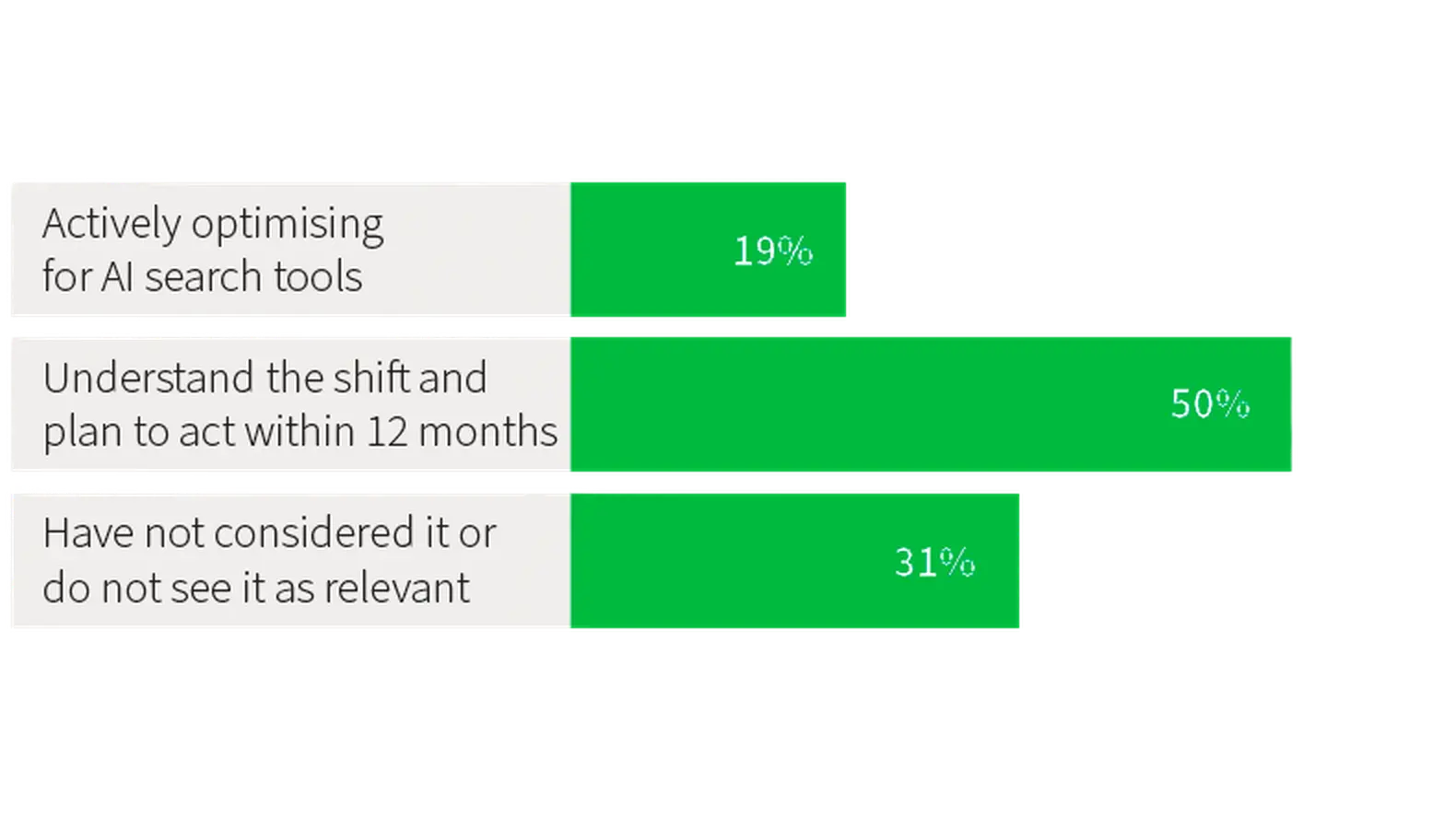
AI search tools are changing the way customers find suppliers. Half the businesses in our survey understand the shift and plan to act within 12 months, while only 19% are preparing now Increasingly, a potential customer may ask an AI tool to identify suitable suppliers rather than work through a page of search results. If your business is not included in that answer, you may never know the opportunity existed.
How AI search is different
For two decades, being found online meant ranking on Google. AI search works differently. The customer asks a full question, such as 'which Irish suppliers hold a particular accreditation' and receives an answer that names a small number of companies. Survey findings suggest that while many respondents are aware of the shift, the vast majority are yet to take any action on it.

Avril Collins, Marketing & Communications Consultant
How is your business responding to AI search
Half of food and agribusinesses understand that AI search is changing how customers find suppliers and plan to act within the next 12 months. But only 19% are actively optimising for it now, and almost a third (31%) haven’t considered it or don’t see it as relevant.
Why this matters commercially
Traditional search gave customers a list of options to explore. AI search can narrow that list considerably, without the customer scrolling, visiting websites or making their own comparison. That makes your visibility harder to judge. Answers are more dynamic than a page of search results, so asking the same question twice can produce a different set of companies. A search term is also easy to repeat, while a prompt sits inside a conversation you cannot see. By the time a buyer is asking which suppliers to consider, they may have spent ten minutes narrowing the question and you have no way of knowing what they told the tool before your name came up, or did not.
It is a mistake to assume this only affects consumer brands. Buyers and technical staff at food manufacturers and retailers use these tools, as do wholesalers and distributors building supplier lists, farmers and contractors comparing machinery options and consumers looking for a local producer. This practice now has a name, Generative Engine Optimisation, or GEO. Where SEO was about ranking in a list of links, GEO is about becoming one of the small number of sources an AI tool draws on to construct its answer. The two are related but not identical, with GEO putting more weight on being independently referenced and accurately described elsewhere.
What helps your business get found
A clear and accurate website remains important, but it is only one source of information about your business. Independent references can strengthen your visibility and credibility, for example, named customers, certifications, trade publications, industry awards and association listings. Many Irish food and agribusinesses have built their reputation through relationships rather than promotion, years supplying the same customer, trust with a co-op, or deep expertise in a particular category. Those strengths may be well understood within the sector without being visible online.
With 50% of respondents planning to act within the next 12 months and 19% already doing so, this is likely to become a more competitive area. One reason businesses delay is that managing this process involves a number of functions across the business. While marketing should have overall responsibility, other departments hold the information and evidence needed. They also know the questions customers actually ask them, which is a good guide to the prompts a buyer might use. In a smaller business with no marketing function, this can easily fall through the cracks. Where new work sits, and who carries it, is a question owners now face repeatedly. The businesses that answer it quickly tend to be the ones that got ahead of the last change too. It is worth asking one question at your next management meeting. If a customer asked an AI tool tomorrow to recommend a supplier like you, would your business appear?
1 Run the test
Ask the AI tools your customers are most likely to use, such as ChatGPT, Claude, Copilot, Gemini and Google AI Overviews. Ask what your customers would ask, for example "Which Irish companies supply [your product]?". Ask more than once, in more than one way, and on more than one tool because the answers vary between conversations and between platforms. Note whether you are named and whether what is said about you is accurate.
2 Agree a plan
The plan should have actions, owners and deadlines. Marketing should have ultimate responsibility, but the evidence sits across the business, so each action needs a named owner and a deadline. Start by asking technical, sales and customer service what questions customers put to them.
3 Build the evidence
These tools can only draw on what is published about you, so having the information available increases your chances of mentions. That means a clear website stating what you supply, to what specification, for whom and at what scale; named accreditations rather than a general claim to quality; case studies naming an application, a customer and an outcome; independent coverage such as trade media, industry awards and speaking at sector events; and accurate, consistent listings in directories and association pages.
4 Keep it current
Re-run the test every three months. Note whether you are named more often than last time and whether the description of you is still accurate. Update your website, listings and accreditations whenever something changes in the business, and re-test after any significant change.